
Planning and Housing Committee City of Toronto
100 Queen Street West
Toronto ON M5H 2N2
Re: PH25.3 – Community Within Reach: Expanding Housing Options in Neighbourhoods (EHON) Neighbourhood Retail and Services Study – Phase Three Final Report (Ward All)
Dear Chair Perks and Members of the Committee,
The ABC Residents Association (ABCRA) represents residents in the area bounded by Bloor Street West, Avenue Road, Yonge Street, and the CPR tracks. We appreciate the intent of the Community Within Reach study and support the City’s goal of improving access to shops and services to create more connected, walkable neighbourhoods.
Executive Summary
ABCRA supports the general intent to strengthen our main streets and modernize regulations for home-based businesses. However, we have significant concerns that the current proposal’s lack of safeguards will harm the livability and character of local residential streets.
Our position is guided by three core principles:
- Focus commercial intensity on major streets where the infrastructure exists to support it.
- Protect the quiet, residential nature of interior streets from becoming de facto commercial zones.
- Ensure home occupations remain low-impact and do not transform multi- unit homes into commercial offices.
Summary of ABCRA’s Key Recommendations:
- On Major Streets: Mandate that all commercial activity such as entrances, business signage, display areas, commercial lighting and patios be oriented to face the main street – not the adjacent residential street and tightened approvals for patios.
- On Interior Streets: Reject the introduction of designating new “Community Streets” city wide at this time Any future consideration must be limited to tightly scoped pilot projects in truly underserved areas. It is important to define success for these pilots with pre-published metrics.
- On Home Occupations: We recommend adding clear rules to make sure home-based businesses in multi-tenant buildings, such as four or six- plexes stay small in scale and don’t transform these homes into busy commercial spaces.
- On Process: We strongly urge extending the public review period for these important reports to permit a clear understanding of the proposals full details and ensure transparency.
Detailed Position
1. Strengthening Major Streets: Focus Activity Where It Belongs
The ABC community already exemplifies a complete, walkable neighbourhood. Nearly every household is within 500 metres of a main street that provides a full network of retail, services, and transit. The critical question for midtown is not whether access exists, but how to strengthen established main streets while protecting the livability and safety of adjacent residential streets.
ABCRA supports the reasonable expansion of neighbourhood-serving retail on major streets, provided new permissions include design controls.
We Recommend:
- Primary Frontage Mandate: New or converted businesses must maintain their primary identity on the main street. Signage and display areas, and commercial lighting must be limited to this frontage. Side streets not separated from the main street by a lane should not become secondary commercial facades.
- Conditional Outdoor Use: Patios should not be permitted as-of-right but should continue to require a variance through the Committee of Adjustment to allow community input and context-specific conditions.
- Integrate Vision Zero Safety: Any expansion must be paired with pedestrian safety measures that address loading zones and foot traffic.
Economic Context:
With elevated commercial vacancy rates on corridors like Bloor – Yonge (18.75% as of Q2 2024, per JLL), the City’s focus must be on revitalizing these main streets, not dispersing limited demand into residential interiors. This initiative also supports the vital role of Business Improvement Areas (BIAs), whose effectiveness depends on maintaining commercial activity along main streets.
2. Protecting Interior Residential Streets: Reject Retail Permissions
While some communities are retail deserts, the report lacks evidence of such gaps. The City proposes broad permissions without analysis identifying where neighbourhood retail is genuinely needed.
The City frames the “need” around projected population growth. However, The City’s Development Pipeline 2024 shows 854,898 proposed residential units in the pipeline with many approved but not yet built. This raises questions about the actual urgency for immediate, city-wide changes to residential streets, especially when the city cannot regulate hours of operation.
The proposal relies on complaint-driven enforcement, which is already overstretched on main streets. It is unfair to expect residents to monitor compliance for new commercial activities on their own blocks. Moreover, the City’s own Micromobility and Vision Zero strategies note growing safety and congestion pressures on narrow streets not designed for loading or commercial zones.
ABCRA is opposed to introducing retail onto interior residential streets without more careful study, targeted identification of the actual ‘need’ of said retail, with a proven enforcement plan.
We Recommend:
- Rejecting the current proposal to permit retail on interior residential streets city-wide.
- A transparent gap analysis identifying specific areas with a demonstrable lack of local services (i.e., true retail deserts).
- An ‘Initial Targeted study with Controlled Expansion’: If pursued, limit permissions to a few underserved areas, only after publishing measurable success criteria (parking, noise, and safety impacts).
- Main Street Vacancies First: Focus City resources on revitalizing designated commercial corridors.
3. Home Occupations: Prevent Commercial Overload in Homes
We agree with the City that many residents now work from home or operate small-scale businesses from home. The City’s proposed updates to home occupation rules acknowledge that shift. ABCRA supports modernizing rules for home-based work with some safeguards ensuring these uses remain low-impact on neighbourhood residents.
Our concern is the cumulative impact on multiplexes. Treating a quiet home office with the same regard as multiple high-traffic businesses could transform small buildings into commercial hubs without the necessary design, infrastructure, or oversight.
A fourplex or six-plex into a de facto commercial building with 8 to 12 employees on-site plus clients, without the required design, infrastructure, or oversight to insure safety and mitigate noise, traffic, and parking demands on multiple households, both living in the building and nearby.
We Recommend:
- Explicit Safeguards for Multi-Unit Buildings: Amend the bylaw to include caps on the number and intensity of home occupations allowed per building.
- Maintain Signage Control: Defer any changes until the Sign By-law review is complete, keeping signage subject to current limits.
- Plan for Enforcement: The City must outline how it will resource complaint responses for noise, waste, and traffic. Relying solely on resident-driven reporting is unsustainable.
4. Process & Transparency: A Call for Fairness
The staff report, dated October 16, was not released publicly until October 23 – introducing several significant policy details that had not been discussed during consultations.
A one-week review period to review and understand the details of these complex city-wide changes is inadequate and undermines public trust. The three bylaw amendments were revised and only made public on October 28th!
We Recommend:
- Release Underlying Data: Publish all survey data, methodology, and mapping used to justify the proposals.
- Extend the Review Period: Establish a minimum of 14 days for public review for all final recommended material before Committee decisions.
Conclusion
Toronto thrives when vibrant main streets and stable residential neighbourhoods coexist. ABCRA supports policies that strengthen our commercial corridors in line with our local established planning frameworks.
We support change, but with the added recommendations that will reduce risk to the quiet enjoyment and safety of residents. We urge the City to adopt our recommendations to ensure these changes reinforce the development of complete and livable communities.
Sincerely,
John Caliendo and Ian Carmichael
Co-Chairs, The ABC Residents Association
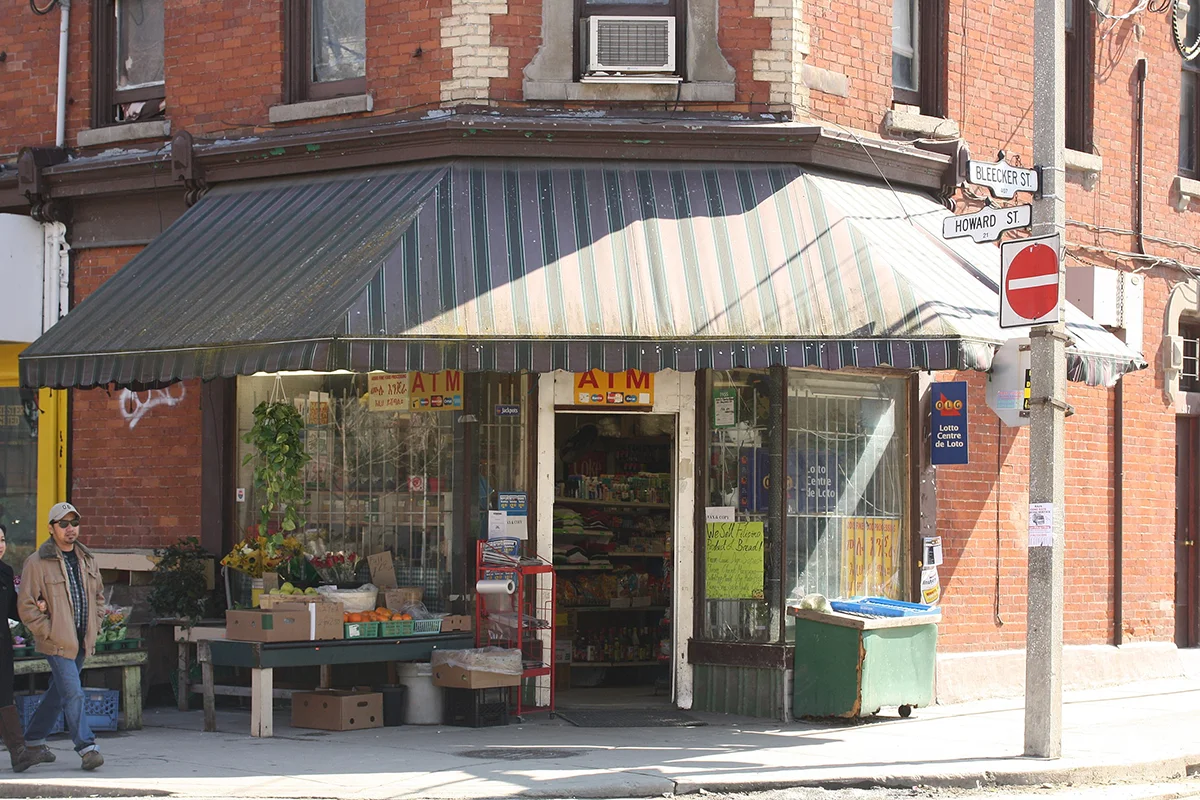
Image: Danielle Scott, CC BY-SA 2.0, via Wikimedia Commons

